Creative Commons Copyright: A Key Competence for Responsible Digital Citizens
In today’s digital society, the ability to access, remix and share information plays a central role in how people learn and collaborate. Yet this openness must be balanced with respect for intellectual property, ethical creation and responsible participation online. Creative Commons (CC) licensing has emerged as a vital tool for navigating this balance, offering clear and accessible ways to understand how digital content can be used, shared or adapted.
Creative Commons licences give creators the power to define the conditions under which others may reuse their work. By clarifying permissions—such as whether a resource can be modified, shared commercially or simply copied with attribution—CC licences promote transparency and reduce the uncertainty that often surrounds digital materials. This empowers learners, educators and professionals to engage creatively without overstepping legal or ethical boundaries.
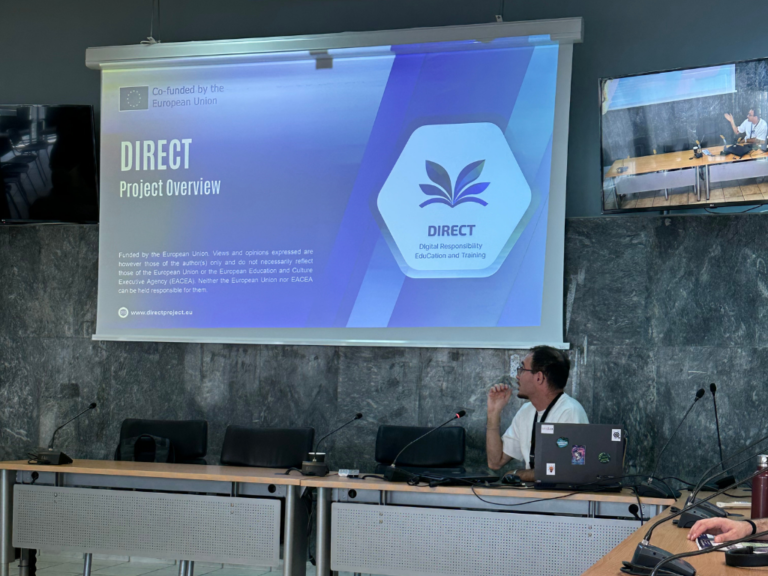
Within the DIRECT Project, which aims to strengthen digital responsibility, critical thinking and ethical behaviour in online environments, understanding Creative Commons licensing represents an indispensable competence. It helps individuals become more conscious digital citizens—people who can navigate information ecosystems safely, evaluate sources critically, and contribute to digital culture in a respectful and informed way.
Learning about Creative Commons supports essential values of the project: openness, accountability, collaboration and respect for authorship. It encourages learners to think about the origins of content, recognise creators’ rights, and make informed decisions when producing or sharing digital materials. In a world where copying and reposting happen with one click, these skills are not optional—they are fundamental.
By promoting awareness of frameworks like Creative Commons, the DIRECT Project reinforces a broader culture of ethical participation and shared responsibility in the digital age.